

6+ years
Same hand-matched team
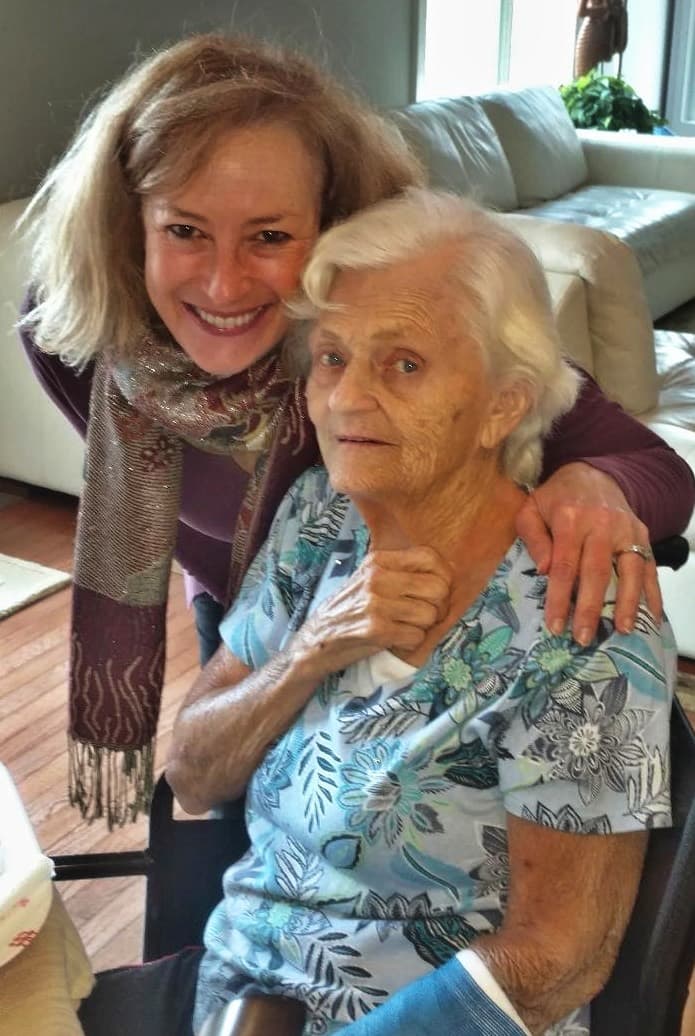
The Marmorstein Family
Potomac, MD
Specialized dementia care, supervised by Andrea Kohn, CRNP — a Nurse Practitioner with 20+ years of geriatric psychiatry experience. Hand-matched caregivers. Same caregivers for years.
Same-day response · MoCo families · LTC insurance accepted
Dementia home care, defined
Dementia home care in Montgomery County works best when the same hand-matched caregivers visit every shift, supervised by a Nurse Practitioner who adjusts the care plan as the disease progresses. MCM Private Care has practiced this NP-supervised model since 2004 — Andrea Kohn, CRNP, personally trains our NPs and oversees every dementia care plan, and works alongside Dr. Nicholas Schor at Olney Psychiatry on complex cases.
Most Montgomery County families searching for dementia home care find a gov resource list or a rotating-staff agency. Neither solves the practical problem: who actually shows up, daily, with the training to handle sundowning, wandering, agitation, and behavioral changes? This page covers what to look for, what it costs, and how MCM does dementia care differently after 20+ years.
The dementia care problem
Sundowning, wandering, behavioral changes, medication mistakes, family caregiver burnout. The standard agency model — rotating staff, no NP — fails dementia families fast. By the second year, most families have cycled through three agencies and someone has gotten hurt. MCM was built specifically for the dementia cases nobody else takes.

NPR feature · April 2026
In a 2026 NPR feature on caring for a spouse with dementia, Andrea Kohn, NP, is described as the “wise and supportive nurse practitioner” guiding the family. Her reframe of the disease — “Dementia is a disease of moments” — has become the quiet center of how MCM teaches families to show up for their loved ones.
Dementia steals memory. It cannot steal the moments your loved one is having right now — the smile when they recognize their caregiver, the laugh at an old joke, the peaceful afternoon in their favorite chair. MCM dementia care is built around protecting and creating moments, not chasing what's been lost. It changes how families show up, and it's the orientation behind every dementia care plan we write.
Read the NPR feature →How we compare
Pick what you're considering for your loved one. See how MCM stacks up.
Andrea or Steve takes the call. We listen, learn the situation, and tell you honestly if MCM is the right fit.
One of our nurse practitioners visits before care begins, evaluates cognitive stage, behavioral patterns, and home safety, and writes the dementia-specific care plan under Andrea's oversight.
Care begins within 24-72 hours. Same caregivers, with Andrea overseeing the plan and crisis on-call always.


In their own words
“My family was finally able to sleep at night knowing my parents are finally receiving the in-home care on a daily basis they desperately needed.”
“Don't wait to call. Don't bother researching competitors. There's no one like them in town. Trust me, I did the research. I have the spreadsheets to prove it.”
“My father literally passed away in Andrea's arms, which I will be forever grateful for. She told him it was okay to let go and he died peacefully.”
“We have had the same group of ladies for at least four years. We feel as if they are part of our family.”
“From the beginning of this part of our life's journey we promised our Dad that he could stay in his home. We are certain that we couldn't have done it without the love, support and skills of the team at MCM.”
“Both our moms breathed their last at our home, surrounded by loved ones, knowing that they were well taken care of, thanks to Team MCM.”
“Steve was extremely responsive and accommodating during what was a very stressful time. He was able to provide high quality caregivers on short notice.”
“In less than 24 hours, despite the home health care aides shortage due to Covid, we had 24 hour care in place for him.”
“I became a client in 2010 when I was unable to navigate the medical system when very ill. I remain a client 14 years later and look forward to continuing for many more years.”
“Of the many people and organizations who helped my aging parents, MCM are the MVPs. They care and they're there when you need them.”
“We're family-owned, family-operated. Twenty-two years. We hand-match every caregiver. Don't let one bad agency ruin it for you.”
“Don't wait till this is a disaster. Till this is out of control.”
“My family was finally able to sleep at night knowing my parents are finally receiving the in-home care on a daily basis they desperately needed.”
“Don't wait to call. Don't bother researching competitors. There's no one like them in town. Trust me, I did the research. I have the spreadsheets to prove it.”
“My father literally passed away in Andrea's arms, which I will be forever grateful for. She told him it was okay to let go and he died peacefully.”
“We have had the same group of ladies for at least four years. We feel as if they are part of our family.”
“From the beginning of this part of our life's journey we promised our Dad that he could stay in his home. We are certain that we couldn't have done it without the love, support and skills of the team at MCM.”
“Both our moms breathed their last at our home, surrounded by loved ones, knowing that they were well taken care of, thanks to Team MCM.”
“Steve was extremely responsive and accommodating during what was a very stressful time. He was able to provide high quality caregivers on short notice.”
“In less than 24 hours, despite the home health care aides shortage due to Covid, we had 24 hour care in place for him.”
“I became a client in 2010 when I was unable to navigate the medical system when very ill. I remain a client 14 years later and look forward to continuing for many more years.”
“Of the many people and organizations who helped my aging parents, MCM are the MVPs. They care and they're there when you need them.”
“We're family-owned, family-operated. Twenty-two years. We hand-match every caregiver. Don't let one bad agency ruin it for you.”
“Don't wait till this is a disaster. Till this is out of control.”
50+ video testimonials, 30+ five-star reviews, zero negative.
The MCM difference
“She has also benefited from the medication management and support from their nurse who visits regularly.”
“My father literally passed away in Andrea's arms, which I will be forever grateful for. She told him it was okay to let go and he died peacefully.”
“Don't wait till this is a disaster. Till this is out of control.”
We can't restore memory. We can protect the moments your loved one is having right now — the smile, the laugh, the peaceful afternoon. NPR-featured. The orientation behind every plan.
Same caregivers reduce sundowning. Rotating staff is the #1 mistake in dementia care. We hand-match 2-3 caregivers to your family. They stay for years.
Big agencies decline complex dementia. We've taken those cases since 2004. Sundowning, wandering, behavioral changes — Andrea has seen it and built protocols for it.
Dementia home care · FAQs
Dementia home care works best when three things are true: (1) the same caregivers come every shift, building familiarity that reduces sundowning and agitation; (2) a Nurse Practitioner writes and adjusts the care plan as the disease progresses, coordinating with the neurologist and geriatric psychiatrist; (3) the family has someone to call when behavior changes suddenly. Standard staffing agencies rotate caregivers and lack medical advocacy — both critical failures for dementia care. MCM has been NP-founded and family-run since 2004, and we take the dementia cases other agencies decline.
MCM dementia caregivers train under Andrea Kohn, CRNP — our co-founder Nurse Practitioner who specializes in geriatric psychiatry and behavioral health. Training covers: dementia-stage assessment, sundowning protocols, communication techniques for cognitive impairment, wandering prevention, safe transfer technique, behavioral de-escalation, sleep-cycle management, and family-as-co-caregiver education. Caregivers also work alongside Dr. Nicholas Schor at Olney Psychiatry on complex cases.
Most families wait too long. The earliest signs that home care becomes necessary: medication mistakes, missed doctor appointments, household tasks left undone (cooking, laundry, hygiene), wandering or getting lost in familiar areas, sundowning agitation in evenings, or family caregiver burnout. Don't wait for a fall or hospitalization. Early intervention — even a few hours per week of trained companion care — slows decline, prevents crises, and keeps the family relationship intact.
MCM's hourly rates run $35–$43/hour depending on shift complexity, with a 4-hour minimum. A typical dementia care program at MCM: $2,500–$5,000/month for part-time companion + medication management, $8,000–$15,000/month for full-time care (40+ hrs/week), $15,000–$25,000/month for 24-hour dedicated team. Long-term care insurance is accepted; MCM handles the claim paperwork. Memory care facilities in MoCo run $11,500–$13,000/month for shared room — and remove your loved one from their familiar environment.
Medicare does NOT cover ongoing dementia home care. It covers limited skilled home health services after a hospital stay (typically 60 days) with a physician's order. Long-term care insurance often DOES cover dementia care if the policy includes home care benefits and the cognitive trigger is met. MCM works with all major LTC insurance carriers, handles claim filing, and helps families maximize benefits. We accept LTC insurance and private pay.
Alzheimer's is the most common type of dementia (60-70% of cases), but dementia is the umbrella term. Other forms: vascular dementia, Lewy body dementia, frontotemporal dementia, Parkinson's-related dementia. Each has different behavioral patterns and care needs. MCM's NP-supervised approach creates individualized care plans based on the specific type and stage. Andrea Kohn, our co-founder, holds geriatric psychiatry expertise across all dementia types.
Andrea Kohn's framework, featured by NPR in April 2026: dementia steals memory, but it cannot steal the moments your loved one is having right now. The smile when they recognize their caregiver. The laugh at an old joke. The peaceful afternoon nap in their favorite chair. MCM dementia care is built around protecting and creating moments — not chasing what's been lost. It changes how families show up, and it's the quiet center of every MCM dementia care plan.
Related
Specialized care for the most common dementia.
Learn more →
Round-the-clock dedicated teams for late-stage.
Learn more →
RN-level care for complex dementia + comorbidities.
Learn more →
6+ years of MCM dementia care at home.
Learn more →
MoCo's premium area for in-home dementia care.
Learn more →
Suburban Hospital-coordinated dementia care.
Learn more →
A 20-minute call. Andrea or Steve takes it. We'll listen, share what NP-supervised dementia care would look like for your family, and you decide what's next.